

Spicy Organic Highlights 2026 Shift Toward Traceable, Lab-Tested Organic Spices as Industry Gaps Draw Consumer Scrutiny
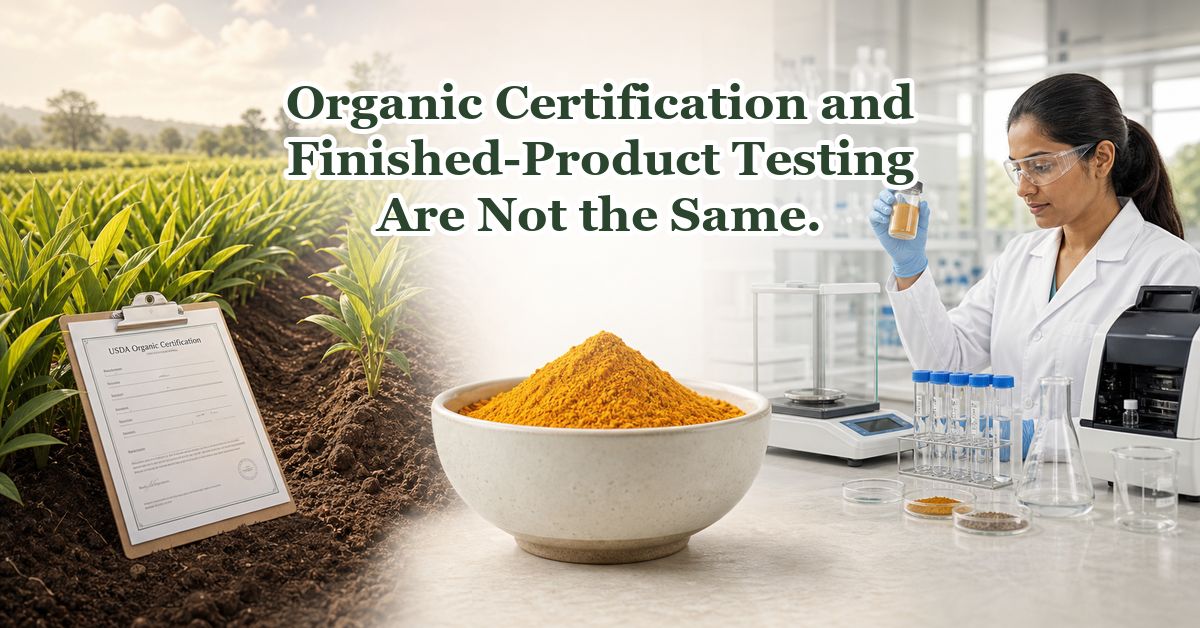
Spicy Organic, a McKinney, Texas-based USDA Certified Organic spice brand, highlights the growing industry gap between organic certification and heavy metal testing of finished spice products.
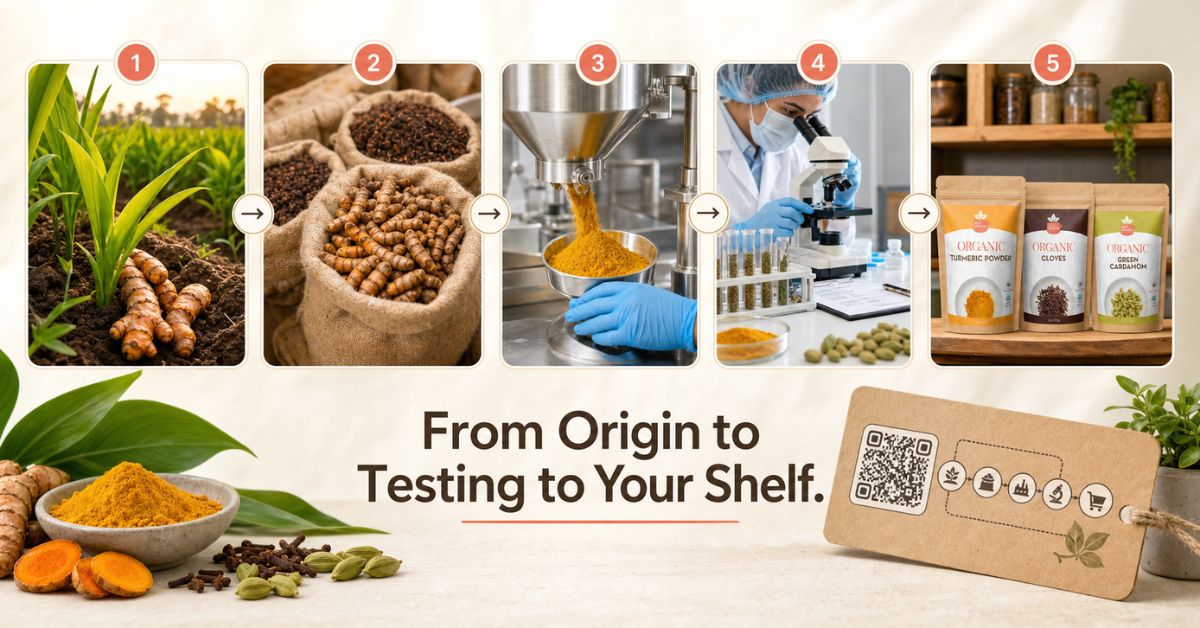
Unlike organic certification, which governs farming practices, supply chain traceability follows a spice from farm of origin through processing and testing to the consumer's shelf — a standard Spicy Organic is building toward across its catalog.
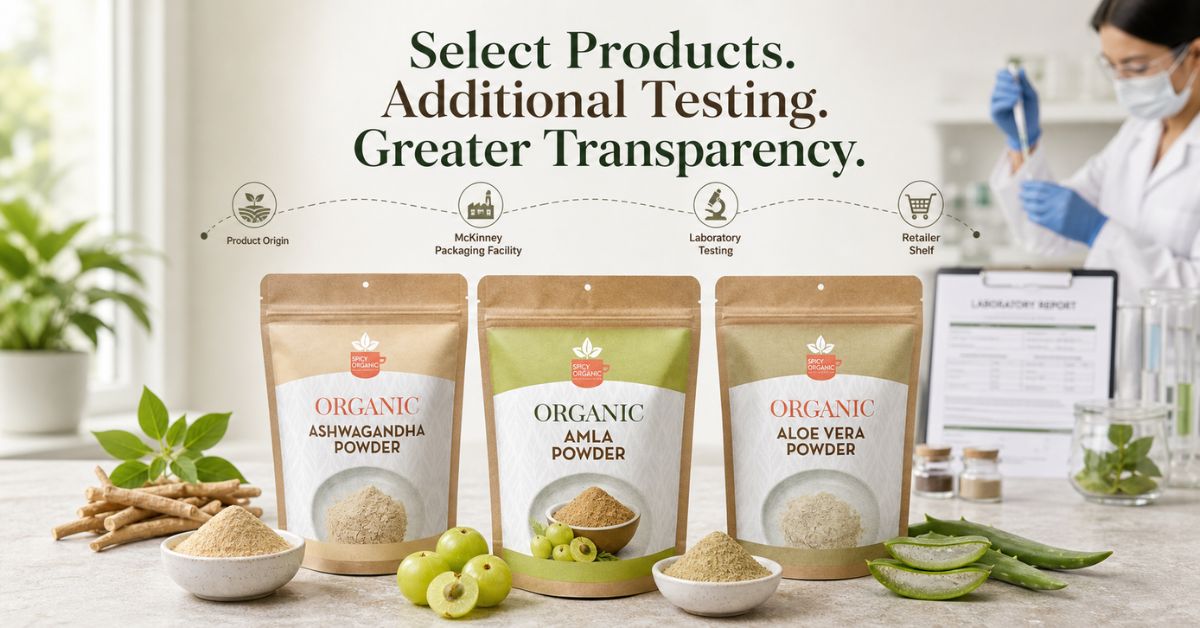
Select Spicy Organic SKUs — including Amla Powder, Ashwagandha Powder, and Aloe Vera Powder — undergo heavy metal testing in addition to USDA Organic certification, available at SpicyOrganic.com and seven H-E-B locations across DFW.
McKinney, Texas organic spice brand highlights a key industry gap: USDA Organic certification does not require heavy metal testing of finished products.
A Consumer Reports investigation that tested 126 dried herbs and spices across 15 categories found that approximately one-third contained combined arsenic, lead, and cadmium levels high enough to raise a health concern for children at typical serving sizes — results that spanned both organic and conventional products alike. The U.S. Food and Drug Administration has not established specific limits for heavy metals in most spice categories as of 2026, leaving the testing burden to individual brands rather than a uniform regulatory floor.
The stakes of opaque supply chains became national news in late 2023, when the FDA traced elevated lead and chromium levels in recalled cinnamon applesauce pouches to a processor in Ecuador. Investigators determined that lead chromate — a pigment used fraudulently to boost weight and color — had been introduced somewhere in a multi-country supply chain. The recall was linked to elevated blood lead levels in children across more than 40 U.S. states and affected products sold under three brand names.
“Organic certification is meaningful — it governs how a spice is grown and what chemicals are permitted in the field,” said Sunil Kumar, Founder of Spicy Organic. “But it doesn’t answer the question that more and more shoppers are asking: has this product actually been tested for contaminants? That’s a different question, and it requires a different kind of accountability.”
Spicy Organic defines supply chain traceability as the ability to document a product’s path from a specific farm or region of origin, through processing and packaging, to the consumer’s shelf — with testing data available at each step. Unlike certification labels, which describe how a crop was grown, traceability describes whether the finished product has been independently verified. As the distinction between certified organic vs. clean label spices becomes a more active consumer conversation, brands that can demonstrate spice supply chain transparency are emerging as the more trusted choice.
Select Spicy Organic SKUs, including Amla Powder, Ashwagandha Powder, and Aloe Vera Powder, undergo heavy metal testing in addition to standard USDA Organic certification. The brand’s full catalog of more than 40 certified organic spices and herbs is available at SpicyOrganic.com, as well as through Amazon, Walmart, and eBay, and at seven H-E-B locations across the Dallas-Fort Worth area.
Frequently Asked Questions:
Q: Does USDA Organic certification test for heavy metals?
A: No. USDA Organic certification governs farming inputs — it restricts synthetic pesticides and prohibited fertilizers and requires documented field history. It does not require testing the finished product for heavy metals such as lead, arsenic, or cadmium. These contaminants can occur naturally in soil, accumulate from historical contamination, or be introduced through adulteration during processing, none of which an organic farming audit is designed to detect.
Q: What does spice supply chain traceability mean?
A: Traceability is the ability to follow a specific product batch backward through every step — farm or region of origin, processor, testing point, and packaging — with documentation at each stage rather than a single certification covering the whole chain. It verifies that the product was tested and where it came from, which organic certification alone does not confirm.
Q: How widespread are heavy metals in spices?
A: A Consumer Reports investigation of 126 spice products across 15 categories found approximately one-third contained combined heavy metal levels (arsenic, lead, cadmium) that raised concern for children at typical serving sizes. This included both certified organic and conventional products. The FDA has not established specific maximum limits for heavy metals in most spice categories as of 2026.
Q: What caused the 2023 cinnamon recall?
A: In late 2023, the FDA traced elevated lead and chromium levels in recalled cinnamon applesauce pouches to a cinnamon processor in Ecuador. Investigators determined the contamination involved lead chromate, believed to have been added intentionally to boost weight and color. The recall affected products across three brand names and was linked to elevated blood lead levels in children across more than 40 U.S. states.
sunil kumar
Spicy Organic LLC
email us here
Visit us on social media:
LinkedIn
Instagram
Facebook
YouTube
TikTok
X
Other
From Farm to Your Morning Cup — The Journey of Organic Spices
Legal Disclaimer:
EIN Presswire provides this news content "as is" without warranty of any kind. We do not accept any responsibility or liability for the accuracy, content, images, videos, licenses, completeness, legality, or reliability of the information contained in this article. If you have any complaints or copyright issues related to this article, kindly contact the author above.
